Why Play Matters as Much as Practice in BMX Racing
Watch any BMX race and you’ll see the results of hours of structured training. Riders nail their gate starts with precision, lean into corners like they’re on rails, and pump rhythm sections with machine-like efficiency. Behind that performance is focused practice—the timed sprints, the gate repeats, the endless laps. But ask some of the sport’s most seasoned racers and you’ll hear a different truth: play is just as important as practice.
Play might look like messing around on the track when no one’s keeping score—trying a new line through the rollers, throwing in a manual where you’ve never done one before, or simply riding with friends and improvising. At first glance, it might not seem like “training” at all. But these unstructured sessions fuel creativity, teaching riders how to see a track differently and adapt in ways that rigid drills don’t allow. On race day, when chaos erupts in the first turn, creativity is often the difference between threading the needle or going down in the pile-up.
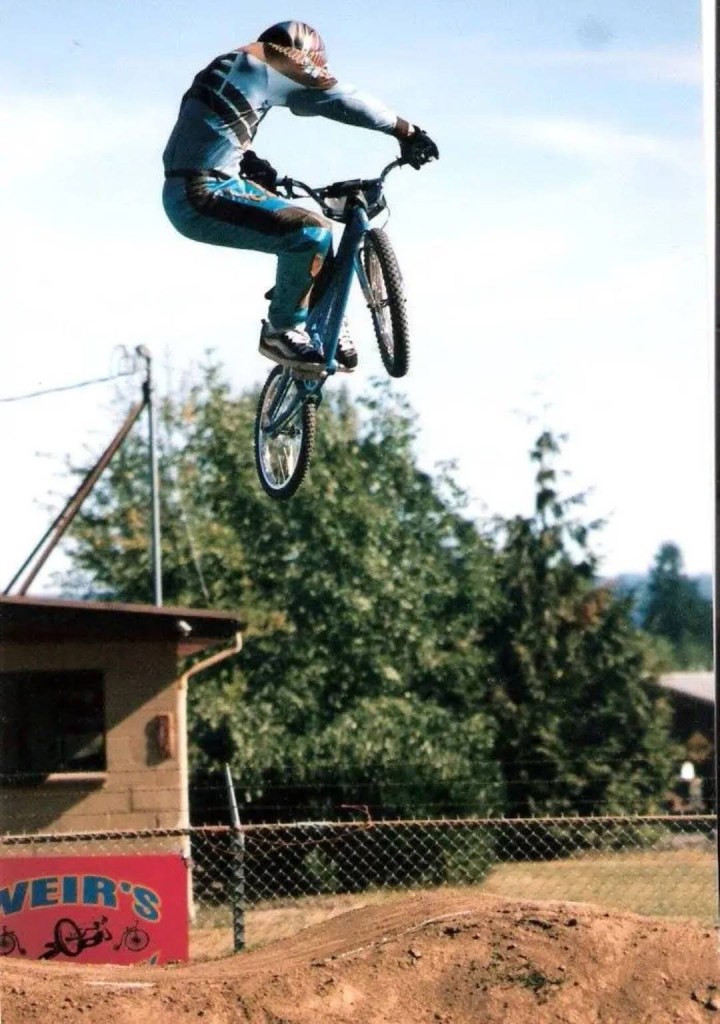
There’s also a mental side to play that’s easy to miss. Focused training can come with pressure: every mistake feels like a failure, every slow lap a setback. Play reframes those moments. When you’re joking around, trying things just to see if they’ll work, errors don’t sting as much—they’re part of the fun. That builds resilience, and resilience is gold when the stakes are high. Miss a pedal at the gate? Play teaches you to shake it off and keep charging.
Sports science backs this up. Studies show that the brain learns movement patterns more deeply when we’re relaxed and enjoying ourselves. That means the tricks and techniques you pick up during a playful ride often stick better than those hammered home through sheer repetition. Play sharpens reaction times and body awareness, too—skills that matter when you’re elbow-to-elbow at full speed.
And then there’s the big one: joy. BMX started as kids racing around dirt tracks, chasing the thrill of speed and air. Without play, that joy can fade, replaced by burnout. Riders who keep play in their training stay connected to the original spark that drew them in. That spark doesn’t just keep you motivated—it’s the fuel that carries riders through long seasons and tough competition.
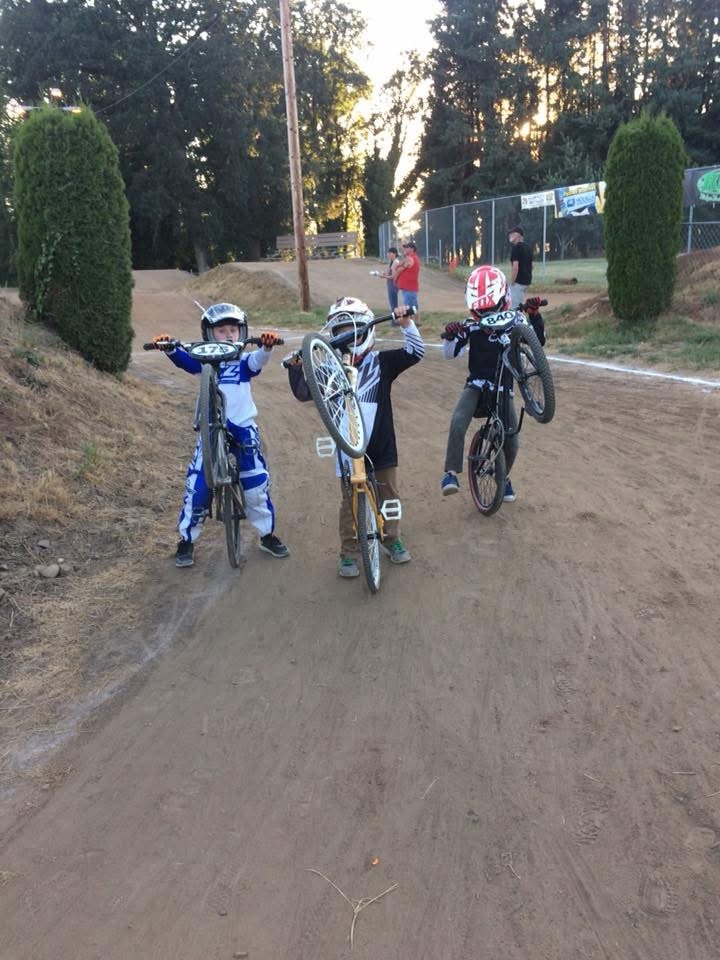
So yes, practice matters. You need the drills, the fitness, the precision. But don’t discount the power of play. It’s where creativity, resilience, and joy live—the qualities that make a racer not just fast, but fearless. The stopwatch may measure your lap time, but it doesn’t measure the laughter, the flow, or the sense of possibility. And in BMX racing, those might be the most important measures of all.
- Implicit Motor Learning: The Power of Doing Without Overthinking
• Study Insight: A systematic review found that implicit motor learning—learning that happens without consciously processing movement instructions—leads to more automatic skill performance in high-pressure or dual-task environments.
“Implicit motor learning is considered to be particularly effective for learning sports-related motor skills. It should foster movement automaticity and thereby facilitate performance in multitasking and high-pressure environments.”
• Meta-analysis confirmation: Skills learned implicitly tend to hold up better under pressure (like competition nerves), compared to explicitly-taught skills.
⸻
- Variability of Practice: Learning Through Change, Not Repetition
• Core principle: Mixing things up during practice—different lines, speeds, or sequences—helps athletes build more adaptable motor “schemas.”
“Variable practice involves practicing a skill under different conditions… Enhances the development of a more flexible and adaptable motor schema, facilitating skill transfer to novel situations.”
• Retention and transfer: Classic experiments and later research have shown that practicing variations of a task leads to better retention than doing the same task repeatedly.
• Updated perspective: Reviews continue to support variable practice as a way to improve learning outcomes—though some caution it’s not a one-size-fits-all solution.
• Conceptual summary:
“The benefits of variable practice include improved adaptability, enhanced motor learning and retention, increased robustness and flexibility of motor representation.”
- Variability and Contextual Interference
• Laboratory findings: High variability (random practice) often results in weaker immediate performance, but stronger retention and transfer later on.
“We found that the random practice schedule in laboratory settings effectively improved motor skills retention.”
• Applied sport nuance: In real-world sports settings, the effects of variability are mixed—some studies show benefits, others not. Moderation and context matter.
⸻
⸻
- Motor Variability Promotes Adaptation
• Individual differences matter: People who naturally exhibit variability in their movement tend to learn and adapt more readily.
“Motor variability is an intrinsic feature… that has been associated with the ability for learning and adaptation to specific tasks.”
⸻
- Challenge Point Framework: Optimizing Difficulty for Learning
• Concept highlight: Learning occurs best when tasks are challenging enough to push the learner—but not so difficult that it overwhelms them. This balance is dynamic and depends on the athlete’s current skill level.
“The fundamental idea is that ‘motor tasks represent different challenges for performers of different abilities’… an optimal challenge point exists when learning is maximized and detriment to performance in practice is minimized.”
🔗 Research Links on Play, Practice Variability, and Motor Learning
- Neuroplasticity and Motor Skill Learning
• Neuroplasticity Subserving Motor Skill Learning – Review of how the brain adapts during skill acquisition.
Link: https://www.ncbi.nlm.nih.gov/pmc/articles/PMC3217208/
⸻
- Variability of Practice & Contextual Interference
• Variability of Practice and Contextual Interference in Motor Skill Learning – Classic paper showing varied practice improves skill transfer.
Link: https://pubmed.ncbi.nlm.nih.gov/12529226/
• Random Practice Enhances Retention and Spatial Transfer (Frontiers in Human Neuroscience) – Evidence that interleaved/random practice improves retention.
Link: https://www.frontiersin.org/articles/10.3389/fnhum.2022.816197/full
• The Effects of the Amount and Variability of Practice on Learning – Study comparing blocked vs random practice for motor learning.
Link: https://pubmed.ncbi.nlm.nih.gov/8165923/
⸻
- Motor Variability and Adaptation
• Motor Variability Facilitates Learning and Adaptation – Shows that natural variability in movement predicts faster learning.
Link: https://www.sciencedirect.com/science/article/pii/S030645222400575X
⸻
- Implicit Learning Under Pressure
• The Effect of Implicit Learning on Motor Performance Under Psychological Pressure: A Systematic Review and Meta-Analysis – Confirms implicit learning leads to more robust performance under stress.
Link: https://www.researchgate.net/publication/358522999_The_effect_of_implicit_learning_on_motor_performance_under_psychological_pressure_A_systematic_review_and_meta-analysis
Categories: Racing
 BMX Oregon
Leave a comment